
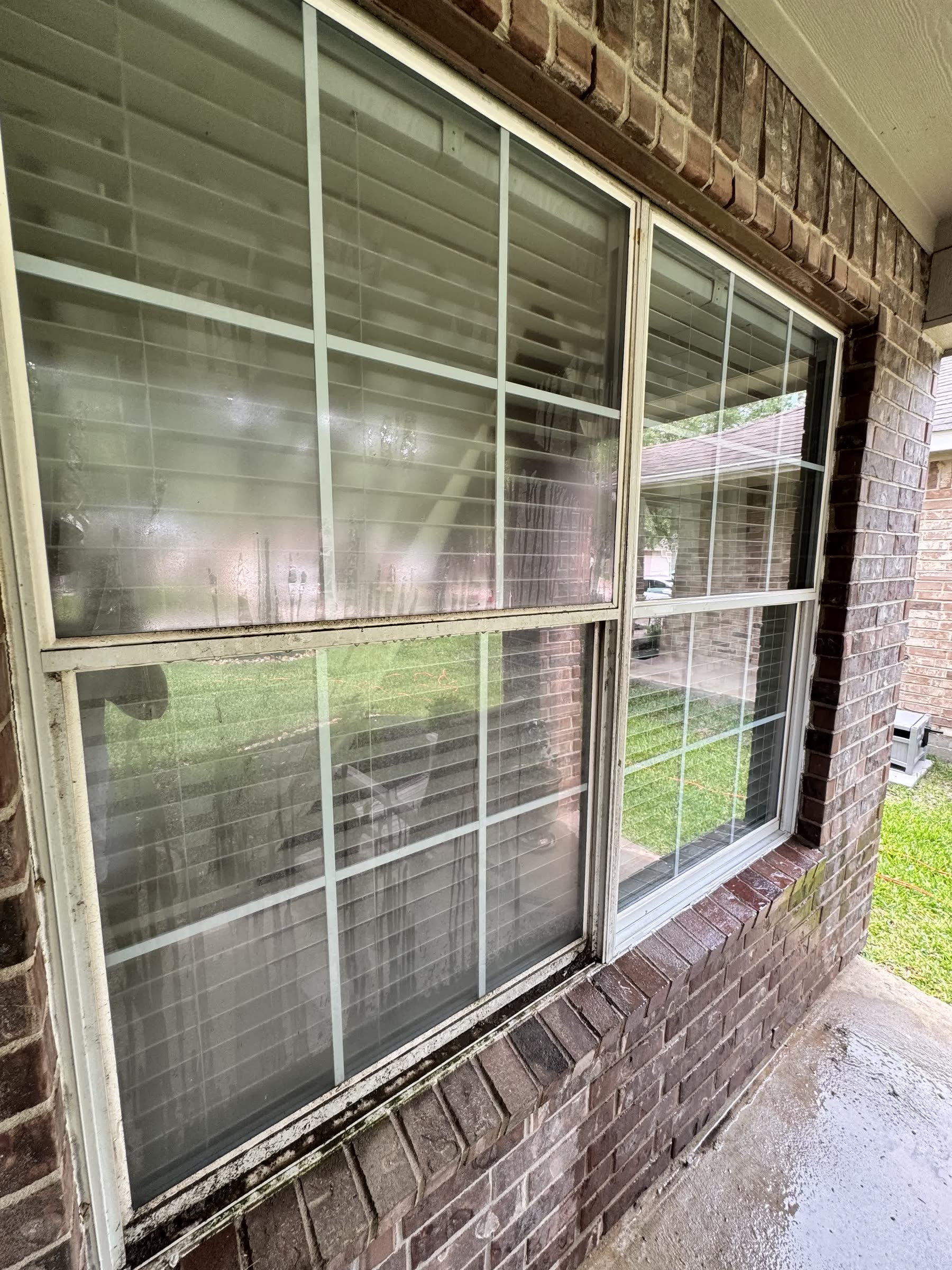
The yellow-green dust storm that coats Houston every April and May is a distant memory by now. The pollen counts dropped months ago. Your car stays clean after a wash again.
So why do your windows still look dull?
If your glass has a hazy, yellowish cast that doesn't come off with rain or a quick wipe, that's not new dirt. That's oak pollen season, still sitting right where it landed in the spring. And a full Houston summer of heat and sun has been baking it on ever since.
What Oak Pollen Actually Does to Your Windows
Oak pollen isn't like ordinary dust that sits loosely on a surface. Pollen grains are sticky and mildly acidic, and Houston gives them ideal conditions to latch onto glass:
- Pollen lands on the thin mineral film that hard water leaves on almost every Houston window, which gives it something to grip.
- Humidity causes the grains to swell and settle into the microscopic texture of the glass.
- The Texas sun breaks the pollen down over the summer, leaving a stubborn residue that dries into a clingy film.
- Rain doesn't rinse it away. It smears it around and the streaks dry in place.
The result is that permanent-looking fog: windows that seem dirty a day after you wipe them, and a house that looks a little tired even when everything else is clean.
Why the Film Gets Worse the Longer It Sits
Here's the part that surprises most homeowners: the pollen film isn't just cosmetic.
Because pollen is mildly acidic, letting it sit on glass through months of heat and humidity gives it time to work on the surface, the same slow process that turns hard water spots from an annoyance into permanent staining. Houston's water is among the hardest in Texas, so most local windows already carry calcium and magnesium deposits. Pollen residue layered on top of mineral deposits, cured by a summer of 100 degree sun, gets harder to remove with every month that passes.
Caught in time, a professional clean removes all of it and the glass comes back to full clarity. Left for seasons on end, the etching can reach a point where no cleaning restores the finish. That's when people end up pricing replacement windows for a problem a cleaning schedule would have prevented.
How to Tell If Your Windows Are Still Carrying Pollen Season
Walk outside in the late afternoon and look at your windows with the sun hitting them at an angle. You're checking for:
- A yellowish or greenish haze that shows up in direct sunlight
- Streaks and smears after rain, which is old residue getting redistributed
- Glass that looks fogged or dull even right after you've wiped it
- Screens with a visible coating (screens trap far more pollen than glass does)
- A powdery yellow buildup along frames and sills
Two or more of those and your windows are overdue. What's on the glass now has had all summer to set.
Why Not Just Wait for Spring?
It's a fair question. If pollen comes back every April, why clean in late summer or fall?
Two reasons. First, the residue on your glass right now keeps working on the surface for as long as it sits there. Waiting until next spring means giving it another six-plus months, and another round of pollen lands on top of the old layer instead of on clean glass.
Second, fall is one of the two best windows of the year for a professional clean in Houston. The brutal peak-summer heat eases off, and your windows are clear for the stretch of the year when you actually live in front of them: holiday hosting, family visits, and the months when the low winter sun makes every flaw in the glass visible from the couch.
Clean now, and a spring touch-up after next pollen season starts you from a healthy baseline instead of a compounding one.
Why Professional Cleaning Beats DIY for Baked-On Residue
For fresh surface pollen, a garden hose does fine. For residue that has cured through a Houston summer, DIY usually disappoints:
- Household glass cleaners aren't formulated for the pollen-plus-mineral compound on the glass. They tend to smear it rather than lift it.
- Wiping gritty glass with a cloth or paper towel drags particles across the surface and leaves fine scratches over time.
- Second-story windows can't be reached safely without proper equipment, and ladder falls are one of the most common home injuries.
- Screens need their own treatment and are easy to damage with a pressure hose.
Our cleans cover interior and exterior glass, plus screens, frames, and sills, using professional solutions and squeegee technique that lift the residue instead of relocating it. If your glass already shows mineral spotting, ask about hard water removal when you book; it's the single most common add-on for Houston homes.
Ready to Get the Spring Off Your Windows?
Rinse & Shine is a family-owned window cleaning company serving Houston and the surrounding area, including Katy, Sugar Land, The Woodlands, Cypress, Memorial, Bellaire, Pearland, and more.
Get a free quote online, or call or text us at 713-885-7674. We usually respond within the hour.